College Safety 101 via condition1combat.com Self Defense Classes
Campus life feels wide open, intoxicating, and fast. Classes stretch late, study groups run later, and the short walk back to a dorm can turn into a quiet, empty trek after midnight. I have coached college students who surprised themselves with how quickly their routines changed between August and October. The rhythm is different from high school. You move among strangers far more often, carry a laptop bag that screams value, and navigate spaces that weren’t built with your personal safety in mind.
Self defense, done correctly, gives you options. It is not just about punching. It is a set of habits, a feel for timing, and the confidence to notice problems early. The physical skills matter, but the real win is removing yourself from bad situations before they grow teeth. That is why structured training at a place like Condition 1 Combat Center, found at condition1combat.com, builds more than technique. It builds judgment. When a student walks into a Condition 1 Combat Center self defense class for the first time, they learn not only how to strike or escape a grab, they learn how to scan a parking lot, when to speak up, and how to manage adrenaline.
The jump from high school to campus, and why it matters
Colleges are dense environments with a constant churn of people. Public pathways cut through campus at all hours. Social events blur lines, roommates come and go, and everyone is learning the same hard lesson: your routines advertise your patterns. The risks are not the same for every student. A commuter who parks in a multi-level garage faces a different set of hazards than a first-year living in a ground-floor dorm. An athlete coming home after practice carries different gear than a studio art major hauling a portfolio at dusk.
Here is the structural difference that matters: in high school you moved within a small circle with predictable adults. On campus the environment is more complex. You must own your space, speak up earlier, and rely less on the assumption that someone nearby will step in. Good training, the kind that Condition 1 Combat Center mma training prioritizes, matches this reality. It teaches you to think in layers. First spot risk, then avoid or defuse, and only then use force as a last resort within the law.
The pyramid: awareness, avoidance, de-escalation, escape, then force
A workable personal safety plan looks like a pyramid. The broad base is awareness. You learn to read rooms and sidewalks the way a lifeguard reads water. That comes from practice. Avoidance sits next. Choose a route that trades two extra minutes for better lighting and more foot traffic. De-escalation is the quiet art of using voice, posture, and distance to keep things from boiling over. Escape means breaking contact and getting to a safer place. Only at the narrow top sits force, and that top is where training at a serious gym pays off.
Condition 1 Combat Center self defense classes wrap all of this together. When a coach at the Condition 1 Combat Center bjj gym runs a drill on framing and hip escape, it is not in a vacuum. Students learn the words to pair with the movement: “Stop. Back up. I don’t want trouble.” They learn to move from verbal boundary to physical barrier while staying within campus policy and state law. This blend is what separates a practical program from something you forget two weeks later.
Quick checks that reduce risk without slowing you down
If you only change a handful of habits, pick the ones that give you big returns for little effort. Think of these as a pre-flight check you run before leaving a building or getting back to your dorm.
- Tell one person your route and ETA, then text “Home” when you arrive.
- Scan 30 feet ahead and 360 degrees behind before you commit to a path or stairwell.
- Keep your dominant hand free and your phone camera one tap from video.
- Use well-lit edges, not center-dark paths, and walk facing traffic on streets with no sidewalk.
- Pause at your car door, glance under and inside, then get in, lock, start, and roll.
Students who drill these checks in class retain them. It becomes muscle memory the same way a jab-cross becomes second nature. Coaches at an mma gym like Condition 1 Combat Center treat these behaviors as skills to be practiced, not as nagging advice to be ignored.
Boundary setting that actually works
There is a difference between being polite and being safe. Clear language plus strong body position gets results. Keep your feet shoulder width, weight slightly forward, hands at chest level like you are talking with emphasis, not fighting. This “fence” keeps you from being easily grabbed. Phrases like “Stop right there,” “Back up,” and “I can’t help you,” carry more weight than an martial arts school near me apologetic “Sorry.” You can still be respectful, just not submissive.
I have seen timid first-years transform in a single session once they found a voice that carried. In Condition 1 Combat Center self defense classes, coaches role-play common campus scripts: a stranger asking for directions at arm’s length, a pushy acquaintance at a party, an aggressive panhandler near a parking deck. Students practice stepping offline, inserting a bag as a buffer, and using the environment to their advantage. It is not theatrical. It is the same sort of reps that make you better at any skill.
What happens when words fail: reliable physical skills
If trouble closes distance, your plan changes. Self defense favors high-percentage, low-complexity movements that hold up under stress. This is where training across disciplines shines, provided it is adapted for real scenarios.
- Brazilian jiu jitsu principles, as taught in the Condition 1 Combat Center brazilian jiu jitsu training program, give you immediate tools against grabs and pins. Learn frames that keep a torso off your airway, hip escapes to create space, technical stand-ups to get back to your feet without turning your back, and clinch entries that shut down wild swings.
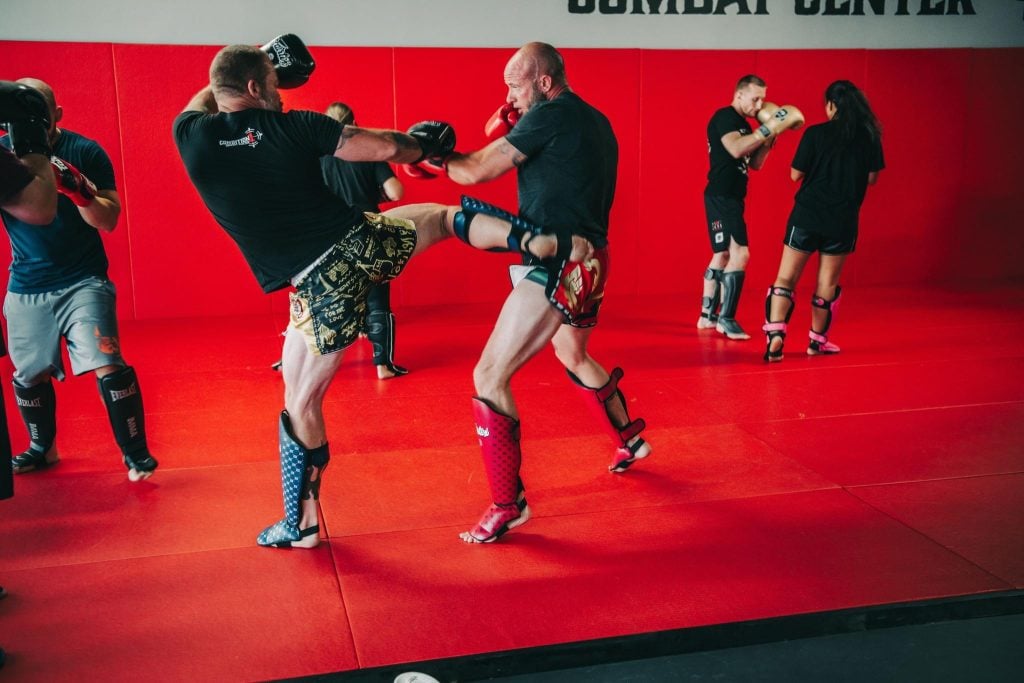
- Muay Thai and boxing, two staples at a mixed program like condition1combat.com’s muay thai gym and boxing gym, sharpen simple strikes that stop forward pressure. Palm heel to the nose or chin, hammerfists to the side of the neck, low kicks to the shin when space allows, and elbows if you have to fight inside. Gloves and pads teach impact safely, then coaches translate those mechanics to bare-hand applications suitable for self defense.
- Wrestling-style clinch work bridges the gap. You do not need a tournament takedown. You need posture breaks, underhooks, head position, and footwork that lets you turn a corner and leave.
Many college students worry about size differences. Technique does not erase physics, but it changes options. A 120-pound student will not out-wrestle a 220-pound attacker in a marathon. What they can do, reliably, is deny grips, crash to a safe clinch, strike the body’s soft targets, and break away to a populated area. They can learn to fight from bottom positions long enough to get out. Condition 1 Combat Center mma training is organized around this reality. The goal is not to win a fight, it is to end a fight by escaping.
Edge cases matter. Multiple aggressors change priorities. You might have to use a short burst of force to create a lane, then sprint. Ground fighting on concrete limits big movements. Training on mats still prepares you, but good coaches discuss surface hazards and footwear. If a backpack is strapped on, you will move differently. Practice with it sometimes.
The mental game: stress, adrenaline, and decision speed
Your heart rate spikes, vision narrows, and fine motor skills drop when you feel threatened. It is predictable, which means you can plan for it. Scenario training at an mma gym like Condition 1 Combat Center builds what is often called stress inoculation. The goal is not to traumatize students, it is to safely lift heart rates with short, realistic drills, then coach them back down with breathing and a post-event checklist.
Box breathing, 4 seconds in, 4 hold, 4 out, 4 hold, is simple and portable. So is a quick after-action routine: Am I safe, can I move to safety, who do I call, what details can I write down now. Students who run this sequence in training recall it when it counts.
Parties, alcohol, and consent on campus
Most risk spikes where judgment drops. Alcohol and crowded rooms make boundary enforcement harder, not impossible. Bring your own can or watch it poured. Keep a hand over the top in tight crowds. Agree on a buddy system ahead of time and make it real code, not just talk. If someone isolates your friend near a stairwell, a direct approach often works: “We need her for a ride, thanks,” then take the arm and move. If direct feels risky, create a distraction or pull in a bouncer or RA. Intervention styles get taught in many university programs, and a good self defense class runs those drills too so your body knows what to do while your brain catches up.
Consent lives in clarity. Slurred, pressured, or ambiguous is a no. Coaches at places like the Condition 1 Combat Center boxing gym and bjj gym talk about this openly, because most harm prevention is social, not physical. Knowing how to hit pads is great. Knowing how to walk a friend out without drama is better.
Transit, rideshare, and parking structures
Commuters and late lab students often spend the last 5 minutes of their day in a garage or at a curb waiting on a rideshare. Verify the plate, the driver’s name, and who they are picking up before you open the door. Sit behind the driver on the passenger side so you can see the hands and reach your own door lock. If the route looks wrong, ask about a detour once. If the answer is nonsense, say you feel ill and need to get out at the next public spot.

Garages funnel people into choke points. Choose ramps with parallel routes or stairs that open to a lobby, not a dead end. Carry your keys between fingers is outdated advice. Keep them accessible, yes, but not as a weapon that could break your hand. If you suspect someone is trailing you, change pace and direction near a staffed desk or group, then turn and make brief, neutral eye contact. Predators prefer ambiguity.
Low-profile tools that help without false confidence
There is a trap in thinking gear equals safety. Tools help only if they fit your habits and local laws, and you train with them. I favor simple, legal items that students actually carry. If your campus allows it and your local laws permit, a modest tool kit looks like this:
- A small, high-lumen flashlight with momentary on, used before anything else, not just after trouble starts.
- A phone with emergency contacts on the lock screen and a shortcut to call campus police.
- A slim whistle or personal alarm to spike attention in quiet zones like garages.
- Footwear you can move in. If you love slides, at least keep a light pair of trainers in your bag.
- A soft tourniquet or compact trauma bandage in your backpack if you carry blades for art or tools for lab, with brief training on use.
If your state allows defensive spray and your campus does not restrict it, train with an inert canister at a supervised class like those at condition1combat.com. Understand wind, range, and how to shield your own eyes. Sprays are not magic. They are a window maker.
How Condition 1 Combat Center builds functional skill
The method matters as much as the curriculum. A strong program alternates technical learning with live application. At the Condition 1 Combat Center mma gym, beginners often start with stance, footwork, a basic jab-cross, and a technical stand-up in week one. No rush, no chest thumping. Coaches then layer in clinch entries, framing, and escape routes. Brazilian jiu jitsu classes emphasize frames, hip movement, and posture control before submissions, because self defense priorities differ from sport.
Muay Thai sessions build a few dependable strikes and how to shield and counter, not a thousand fancy combinations. Boxing sharpens distance and timing. Across all of it, the coaches translate sport technique into self defense context, which is what you want from a place like the Condition 1 Combat Center muay thai gym or the condition1combat.com bjj gym. You do not need a black belt to get safer. You need a few tools, trained honestly, under a coach who pressures you just enough to reveal gaps.
Condition 1 Combat Center mma training and self defense classes also tend to include situational scenarios that mirror campus life: dorm hallway confrontations, stairwell escapes, backpack-specific movement, and seated defense for bus or lecture hall contexts. It is a small detail, but it moves the needle.
Building a training plan that fits a college schedule
You will not train five nights a week during midterms. Aim for two sessions most weeks and a third when your workload allows. One striking class, one grappling-focused class, then rotate a third day as you can. If your program at mma gym Condition 1 Combat Center offers fundamentals blocks, commit to completing one full block before you judge progress. You will know you are on track when your footwork feels less clumsy and you can perform a technical stand-up without thinking.
Recovery is part of safety. Sleep debt slows reaction time and nudges you into bad choices. If you stack late study with hard sparring, give yourself a lighter technical day or mobility work. Most gyms, including condition1combat.com, post schedules that allow early or late options. Pick times you can keep. Consistency beats intensity for beginners.
Measuring progress beyond belts and bruises
Belts and glove size do not tell the whole story. Track outcomes that matter to your life. How quickly can you scan and identify three exits in a new building. Can you recall the last four blocks of a solo walk without checking your phone. Time your technical stand-up on each side. Count how many verbal boundary reps you can do in a row without your hands dropping. Keep a brief journal for two weeks and note when you noticed something odd before it escalated. These are real, transferable wins.
On the physical side, simple benchmarks help. A one minute round of steady shadowboxing without crossing your feet or holding your breath. Ten proper frames and hip escapes in a row without your hands wandering. Grip strength that lets you control a jacket lapel for 10 seconds under moderate resistance. Small numbers, but they add up.
After an incident: what to do and who to call
If something happens, your job is not to be a hero. It is to get safe and preserve choices. Move to a lit, populated area. Call 911 if you are off campus or campus police if you are on campus. If you were touched or assaulted and you might consider reporting, try to avoid showering or changing until you have spoken with a medical professional. You can request a forensic exam and still decide later about legal steps. Universities typically have confidential advocates who can explain options without forcing your hand.
Write down details as soon as you can. Time, place, what was said, clothing colors, any vehicle description. If you captured video or audio, back it up. Tell someone you trust. Trauma does odd things to memory and emotion. A counselor can help you process and plan next steps. If medical care is needed, go. If you defended yourself physically and caused injury to the other person, the same rules apply: call, record, and request counsel before giving lengthy statements.
Parents and supporters: how to help without hovering
The aim is to build capable, independent adults. Helicoptering backfires. Instead, set up a weekly check-in that includes a quick review of safety habits. Offer to pay for a fundamentals block at a reputable program like the mma gym at condition1combat.com if your student is interested, then let them own the process. Provide a small budget for rideshares when walking is a bad idea. Ask them to program emergency contacts with notes about medications or conditions. Respect their autonomy, be their resource, and avoid guilt-laden lectures.
Picking the right gym and getting started
What makes a gym worth your time is not shiny equipment, it is coaching quality and culture. Visit or call. Ask how they adapt sport techniques for self defense. Ask whether beginners get separate instruction, how they prevent injuries, and whether there are female coaches or mentors if that matters to you. A place like Condition 1 Combat Center, with dedicated programs in mma, brazilian jiu jitsu, muay thai, and boxing, plus focused self defense classes, checks these boxes. Many students start with a trial week to feel the vibe. If coaches answer with patience and teach with clarity, you will know quickly.
You do not need to prepare before your first class. Wear clean athletic clothes, bring water, and show up five minutes early to introduce yourself. Expect to work on stance, distance, and a couple of core escapes. You will sweat, you will be a little awkward, and then you will get better. That improvement is addictive.
Final thoughts and a straightforward next step
College is a season of growth. Safety is not about fear, it is about freedom to enjoy that season without preventable harm. A handful of smart habits, a practiced voice, and a few reliable physical skills change everything. You can learn them. Thousands do every year.
If you are ready to start, look up the class schedule at condition1combat.com and check the self defense offerings at the Condition 1 Combat Center. Whether you begin in the boxing gym for timing and footwork, the bjj gym for escapes, or a blended self defense class, you will be training skills that matter on the walks between lectures, in the ride to your apartment, and in the moments when confidence pays off most.